





Scientific Cultivation of Oyster Mushroom
Project Co-ordinators:
- Dr. Jasmee Patel (PI) - Assistant Professor (Plant Pathology), GUNI-KKIASR
- Dr. Kalpesh Vaghela (Co-PI) - Assistant Professor (Horticulture), GUNI-KKIASR
Objectives of the project:
The objectives are mentioned below:
- To establish a well equipped mushroom research laboratory to study.
- To test the nutrient status of predominant mushroom species.
- To develop cultivation protocols of oyster mushroom.
- To learn harvesting and post-harvest practices.
- Value addition and sensory evaluation of fortified mushroom biscuits.
Process:
The brief process of mushroom production and post harvest practices is as follows:
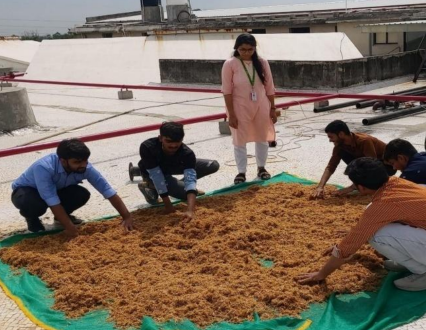
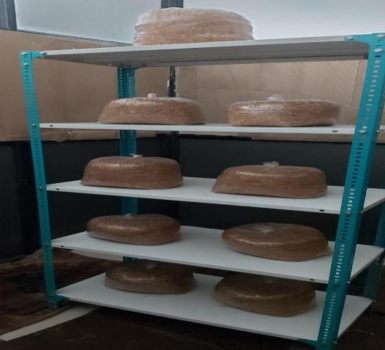
In the first phase, the Oyster Mushrooms were successfully cultivated in a controlled laboratory environment, aiming to provide practical training to students in product development and farming. The process began with obtaining mushroom spawn, which is essentially the mycelium (the vegetative part of the fungus) grown on a suitable substrate. The next step involved preparation of the wheat straw substrate. The substrate is usually sterilized to eliminate competing organisms and provide a clean environment for mushroom growth. The prepared substrate was inoculated with the mushroom spawn by placing spawn- infused materials on top of the substrate. The inoculated substrate was then placed in a controlled environment, typically in a dark and humid incubation chamber. The temperature and humidity were maintained at optimal levels to promote mycelial growth. During the first harvest, a total of 2 kg of mushrooms were produced, which were then sun-dried and processed into 1 kg of powder.
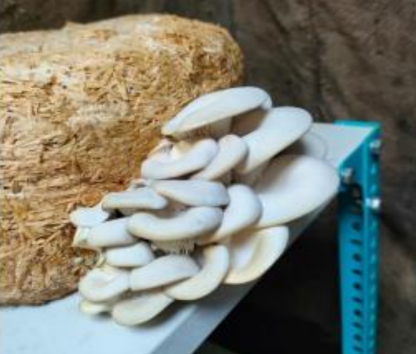
The mushrooms started to form primordia, which were tiny mushroom pins. These pins develop into mature mushrooms within a few days. The oyster mushrooms were harvested by carefully by twisting them off at the base. Harvesting was done when the caps were fully open but still firm.
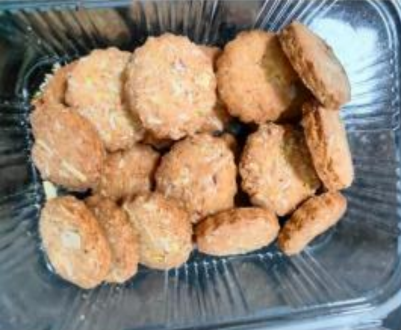
In the second phase, utilizing the facilities of the on-campus bakery, known as Campus Baker, the institute created biscuits incorporating the mushroom powder. These mushroom- based biscuits were subjected to sensory evaluation by a group of respondents who were provided with the product and asked to complete a questionnaire based on their consumption experience. The feedback received indicated that the respondents recognized the nutritional value of the biscuits and expressed satisfaction with their taste, aroma, and value for money.
Number of Participants:
6 students of B.Sc. (Hons.) Agriculture (Batch 2021)
Outcomes:
The salient outcomes of the project are as follows:
- The students gained a clear understanding of the nutritional composition of various oyster mushroom species and their significant role in combating malnutrition.
- The students acquired knowledge of the entire process involved in the controlled environment production of oyster mushrooms. This valuable skill can contribute to providing livelihood opportunities and enhancing nutritional security.
- The students became acquainted with the technique of substrate preparation, specifically utilizing wheat straw that would otherwise be burned by farmers. This sustainable approach maximizes resource utilization.
- The students learned valuable skills in post-harvest management, particularly in adding value to oyster mushrooms through various methods. This knowledge allows for enhanced utilization and marketability of the harvested mushrooms
Gallery